🌍 Welcome To NCS Educational Foundation

South Korea

South Korea

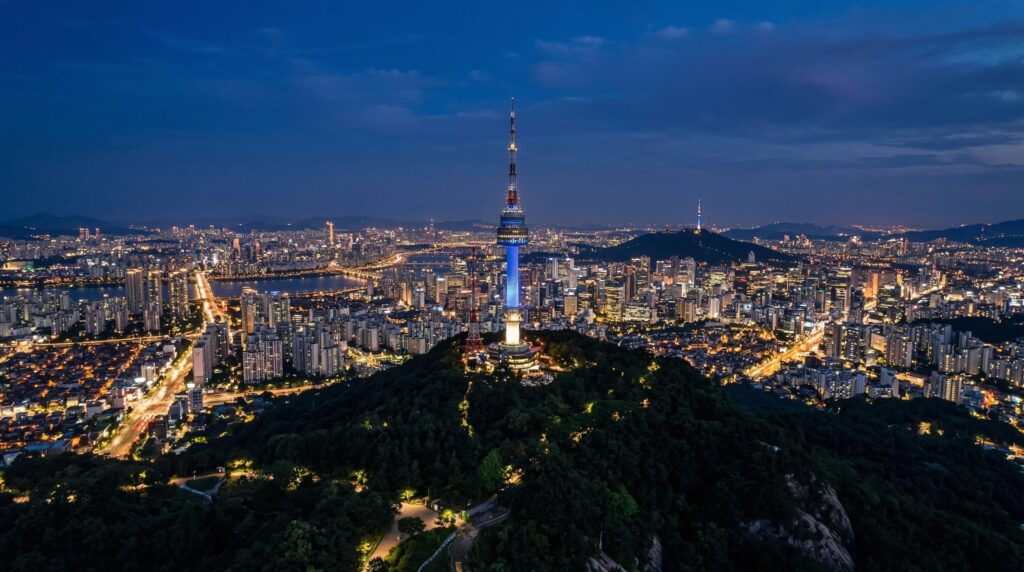
South Korea, officially known as the Republic of Korea, is a highly developed country located in East Asia, on the southern part of the Korean Peninsula. The country is known for its advanced technology, world-class infrastructure, rich cultural heritage, modern cities, and rapidly growing economy. Seoul is the capital and largest city, while other major cities include Busan, Incheon, Daegu, Daejeon, Gwangju, and Ulsan.

South Korea has a population of more than 50 million people, and Korean is the official language. The official currency is the South Korean Won (KRW). South Korea has a strong and diversified economy, with globally recognized industries such as technology, electronics, automobiles, shipbuilding, manufacturing, biotechnology, finance, entertainment, and tourism.

The country is home to internationally recognized companies and is widely regarded as a global leader in technology and innovation. South Korea also has a well-developed public transportation system, including high-speed trains, subways, buses, and international airports, making travel within the country convenient.

The country offers a unique combination of traditional Korean culture and modern lifestyle, with historic palaces, temples, festivals, K-pop, Korean dramas, food, fashion, and modern entertainment attracting people from around the world.

South Korea is also becoming an increasingly popular destination for international students, offering a wide range of programs at universities and colleges, including Korean language courses, undergraduate, graduate, and research programs. International students can benefit from modern educational facilities, technology-focused learning, scholarships at eligible institutions, cultural experiences, and opportunities to gain international exposure.

Overall, South Korea offers a dynamic combination of quality education, advanced technology, career opportunities, rich culture, modern infrastructure, and an exciting student lifestyle, making it an attractive destination for students seeking an international education experience.

Application

Category Details

Category Details
Official Name Republic of Korea
Capital Seoul
Major Study Cities Seoul, Busan, Incheon, Daegu, Daejeon, Gwangju, Ulsan
Currency South Korean Won (KRW)
Official Language Korean
Dialing Code +82
Accepted Language Tests IELTS, TOEFL & New TEPS
Work Opportunities Part-time (up to 25 hours/week during semesters), full-time during breaks
Major Intakes D-2 Visa: Spring Intake (March start), Fall Intake (September start) D-4 Visa: March, June, September, December
Student Visa Type D-2 and D-4 Visa
Post-Study Work Authorization D-10 Job-Seeker Visa: Allows eligible graduates to remain in Korea while seeking suitable professional employment.
Healthcare for Students Health insurance is mandatory (varies by institution)
Category Details
Bachelor’s Degree – D-2-2 Minimum 3.2 GPA or above
Master’s Degree – D-2-3 GPA 2.6 & IELTS 5.5 or above
Korean Language Training – D-4-1 GPA 2.6 & IELTS Not Required
Foreign Language Trainee – D-4-7 GPA 2.6 & IELTS 5.5
Scholarship Up to 100% possible for Bachelor & Master Programs
Type Documents
Academic Documents ·       SEE, 12 & Bachelor (Transcript, Provisional, Graduation, Character)
·       IELTS/TOEFL for English-taught programs or TOPIK for Korean-taught programs, where required.
·       SOP (Statement of Purpose)
Other Documents ·       Valid Passport
·       Citizenship of both applicants and Sponsors
·       CV/Resume also Gap documents required if Gap exists
·       Family Relationship Certificate
·       Proof of Financial Capacity – Bank balance/financial documents as required by the university.
Category Requirement
Bank Balance Certificate for Bachelor USD 20,000 or above
Bank Balance Certificate for Master USD 20,000 or above
Bank Balance Certificate for Language Training Program USD 12000 or above
Financial Sponsors Student and Parents
Degree Tuition Fee
Bachelor’s Degree KRW 5000000- KRW 7000000 (Approx. USD 3500-5000 per year)
Master’s degree KRW 6000000- KRW 8000000 (Approx. USD 4000- 5500 per year)
Scholarships Up to 100% possible depends upon IELTS, TOEFL and TOPIK score
Test Bachelor Score Master Score
IELTS Overall 5.5 Overall 5.5
TOEFL iBT 71 71
New TEPS 327 327
  • Business Administration & International Business
  • Computer Science & Information Technology
  • Artificial Intelligence & Data Science
  • Engineering – Mechanical, Electrical, Electronics, etc.
  • International Studies & International Relations
  • Economics & Finance
  • Marketing & International Trade
  • Korean Studies & Korean Culture
  • Life Sciences & Biotechnology
  • Environmental Science & Energy
  • Tourism & Hospitality Management
  • Media, Communication & Global Communication
  • Choose a Course & University – Select a suitable university and program based on your academic background and career goals.
  • Apply for Admission – Submit your application and required academic documents to the chosen Korean university.
  • Receive Admission / Standard Admission Certificate – After successful admission, obtain the required admission document from the university. For D-2 student visas, the Korean Embassy in Nepal lists the Standard Admission Certificate among the documents provided by the university.
  • Prepare Visa Documents – Prepare your passport, recent photograph, visa application, visa cover letter, SOP, educational certificates and transcripts, language-test results, financial documents, and other required documents.
  • Verify Educational Documents – Applicants from Nepal must follow the Embassy’s current academic-document verification requirements. As of May 2026, the Embassy states that a consular-authenticated copy of the official Graduation Certificate is required for study-visa applications, subject to the stated exceptions for provisional certificates.
  • Prepare Financial & Supporting Documents – Provide the required proof of financial capacity and other supporting documents according to the Embassy’s current checklist. Additional documents may be requested depending on the applicant’s circumstances.
  • Submit the Visa Application – In Nepal, visa application submission has been transferred to the Korea Visa Application Center (KVAC) for regular applicants.
  • Pay the Visa Fee – Pay the applicable visa fee and any KVAC service charges. The current fee depends on the visa type and validity period.
  • Visa Processing – The Embassy advises that processing can take 14 working days or more, so students should apply sufficiently in advance of their planned departure.
  • Receive Visa Decision & Prepare for Departure – After the visa decision, collect your passport through the designated process and, if approved, prepare your accommodation, flight, insurance, and other pre-departure arrangements.

FAQs

1. Why should I choose South Korea for higher education?

South Korea offers globally recognized universities, modern facilities, innovative programs, and a strong academic environment for international students.

2. What programs can international students study in South Korea?

Students can choose from undergraduate, master’s, doctoral, associate-degree, and Korean language programs across a wide range of disciplines.

3. Do I need to know Korean to study in South Korea?

Not necessarily. Some universities offer programs taught in English, while Korean-language programs may require Korean proficiency. Requirements vary by university and course.

4. What are the basic admission requirements?

Requirements depend on the university and program. Generally, students must have completed the required previous level of education and meet the university’s academic and language requirements.

5. Which visa do I need to study in South Korea?

Students enrolled in degree programs generally require a D-2 student visa, while Korean language and certain non-degree programs generally use a D-4 visa.

6. Are scholarships available for international students?

Yes. Students may be eligible for the Global Korea Scholarship (GKS) as well as scholarships offered by individual universities and other organizations.

7. Can I study in South Korea in English?

Yes. Some Korean universities offer English-taught or English-only courses. Students should check the specific program’s language of instruction before applying.

8. How do I apply to a Korean university?

The typical process involves selecting a university and program, checking admission requirements, submitting the application and documents, receiving an admission letter, and then applying for the appropriate visa.

9. When should I start my application?

Application periods vary by university. Students should check the specific university’s admission schedule and prepare documents well in advance.

10. Can NCS Educational Foundation help me study in South Korea?

Yes. Our consultancy can guide students through university selection, application preparation, documentation, scholarship information, and the overall study-abroad process.

Category Details

Category Details
Official Name Republic of Korea
Capital Seoul
Major Study Cities Seoul, Busan, Incheon, Daegu, Daejeon, Gwangju, Ulsan
Currency South Korean Won (KRW)
Official Language Korean
Dialing Code +82
Accepted Language Tests IELTS, TOEFL & New TEPS
Work Opportunities Part-time (up to 25 hours/week during semesters), full-time during breaks
Major Intakes D-2 Visa: Spring Intake (March start), Fall Intake (September start) D-4 Visa: March, June, September, December
Student Visa Type D-2 and D-4 Visa
Post-Study Work Authorization D-10 Job-Seeker Visa: Allows eligible graduates to remain in Korea while seeking suitable professional employment.
Healthcare for Students Health insurance is mandatory (varies by institution)
Category Details
Bachelor’s Degree – D-2-2 Minimum 3.2 GPA or above
Master’s Degree – D-2-3 GPA 2.6 & IELTS 5.5 or above
Korean Language Training – D-4-1 GPA 2.6 & IELTS Not Required
Foreign Language Trainee – D-4-7 GPA 2.6 & IELTS 5.5
Scholarship Up to 100% possible for Bachelor & Master Programs
Type Documents
Academic Documents ·       SEE, 12 & Bachelor (Transcript, Provisional, Graduation, Character)
·       IELTS/TOEFL for English-taught programs or TOPIK for Korean-taught programs, where required.
·       SOP (Statement of Purpose)
Other Documents ·       Valid Passport
·       Citizenship of both applicants and Sponsors
·       CV/Resume also Gap documents required if Gap exists
·       Family Relationship Certificate
·       Proof of Financial Capacity – Bank balance/financial documents as required by the university.
Category Requirement
Bank Balance Certificate for Bachelor USD 20,000 or above
Bank Balance Certificate for Master USD 20,000 or above
Bank Balance Certificate for Language Training Program USD 12000 or above
Financial Sponsors Student and Parents
Degree Tuition Fee
Bachelor’s Degree KRW 5000000- KRW 7000000 (Approx. USD 3500-5000 per year)
Master’s degree KRW 6000000- KRW 8000000 (Approx. USD 4000- 5500 per year)
Scholarships Up to 100% possible depends upon IELTS, TOEFL and TOPIK score
Test Bachelor Score Master Score
IELTS Overall 5.5 Overall 5.5
TOEFL iBT 71 71
New TEPS 327 327
  • Business Administration & International Business
  • Computer Science & Information Technology
  • Artificial Intelligence & Data Science
  • Engineering – Mechanical, Electrical, Electronics, etc.
  • International Studies & International Relations
  • Economics & Finance
  • Marketing & International Trade
  • Korean Studies & Korean Culture
  • Life Sciences & Biotechnology
  • Environmental Science & Energy
  • Tourism & Hospitality Management
  • Media, Communication & Global Communication
  • Choose a Course & University – Select a suitable university and program based on your academic background and career goals.
  • Apply for Admission – Submit your application and required academic documents to the chosen Korean university.
  • Receive Admission / Standard Admission Certificate – After successful admission, obtain the required admission document from the university. For D-2 student visas, the Korean Embassy in Nepal lists the Standard Admission Certificate among the documents provided by the university.
  • Prepare Visa Documents – Prepare your passport, recent photograph, visa application, visa cover letter, SOP, educational certificates and transcripts, language-test results, financial documents, and other required documents.
  • Verify Educational Documents – Applicants from Nepal must follow the Embassy’s current academic-document verification requirements. As of May 2026, the Embassy states that a consular-authenticated copy of the official Graduation Certificate is required for study-visa applications, subject to the stated exceptions for provisional certificates.
  • Prepare Financial & Supporting Documents – Provide the required proof of financial capacity and other supporting documents according to the Embassy’s current checklist. Additional documents may be requested depending on the applicant’s circumstances.
  • Submit the Visa Application – In Nepal, visa application submission has been transferred to the Korea Visa Application Center (KVAC) for regular applicants.
  • Pay the Visa Fee – Pay the applicable visa fee and any KVAC service charges. The current fee depends on the visa type and validity period.
  • Visa Processing – The Embassy advises that processing can take 14 working days or more, so students should apply sufficiently in advance of their planned departure.
  • Receive Visa Decision & Prepare for Departure – After the visa decision, collect your passport through the designated process and, if approved, prepare your accommodation, flight, insurance, and other pre-departure arrangements.

FAQs

1. Why should I choose South Korea for higher education?

South Korea offers globally recognized universities, modern facilities, innovative programs, and a strong academic environment for international students.

2. What programs can international students study in South Korea?

Students can choose from undergraduate, master’s, doctoral, associate-degree, and Korean language programs across a wide range of disciplines.

3. Do I need to know Korean to study in South Korea?

Not necessarily. Some universities offer programs taught in English, while Korean-language programs may require Korean proficiency. Requirements vary by university and course.

4. What are the basic admission requirements?

Requirements depend on the university and program. Generally, students must have completed the required previous level of education and meet the university’s academic and language requirements.

5. Which visa do I need to study in South Korea?

Students enrolled in degree programs generally require a D-2 student visa, while Korean language and certain non-degree programs generally use a D-4 visa.

6. Are scholarships available for international students?

Yes. Students may be eligible for the Global Korea Scholarship (GKS) as well as scholarships offered by individual universities and other organizations.

7. Can I study in South Korea in English?

Yes. Some Korean universities offer English-taught or English-only courses. Students should check the specific program’s language of instruction before applying.

8. How do I apply to a Korean university?

The typical process involves selecting a university and program, checking admission requirements, submitting the application and documents, receiving an admission letter, and then applying for the appropriate visa.

9. When should I start my application?

Application periods vary by university. Students should check the specific university’s admission schedule and prepare documents well in advance.

10. Can NCS Educational Foundation help me study in South Korea?

Yes. Our consultancy can guide students through university selection, application preparation, documentation, scholarship information, and the overall study-abroad process.

Related Course

You might be interested in

Australia

South Korea

Canada

United Kingdom

USA

New Zealand

Inquiry Form

When you submit this form, it will not automatically collect your details like name and email address unless you provide it yourself.


Academic Qualification